Best Electric Recliner Chairs
Find Comfort and Independence with Electric Recliner Chairs
Remember the last time you sank into a really comfortable chair after a long day? That feeling of relief as your body finally relaxes? Now imagine getting that perfect position with just the touch of a button.
Electric recliners do exactly that. Unlike those manual recliners where you're yanking levers or pushing back with your body weight (and sometimes getting stuck halfway), power recliners do all the work for you. The internal motor smoothly adjusts your position from sitting upright to fully reclined—and for many models, can even help lift you to a standing position.
It's not just about luxury, though that's definitely part of it. For anyone with limited strength, mobility issues, or those who simply want effortless comfort, these chairs can be life-changing. They offer independence that might otherwise be lost.
Key Features of Modern Power Recliners
Single Motor vs. Dual Motor Operation
Think of this as the difference between basic and premium. Single motor recliners operate the backrest and footrest together—when one moves, the other does too, like they're connected by an invisible string. Recline the back and up comes the footrest in one synchronized motion.
Dual motor systems, on the other hand, give you that next-level customization. Want to sit upright but put your feet up? No problem. Need to recline the back a bit while keeping your legs down? You can do that too. It's like having two separate chairs in one, with each part doing exactly what you want, when you want it.
Lift and Riser Functionality for Enhanced Mobility
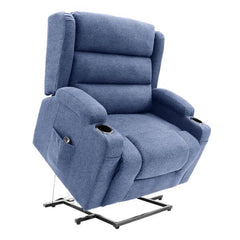
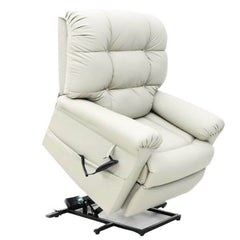
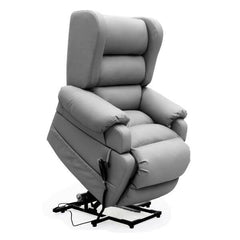
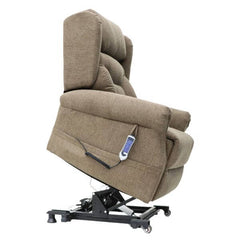
This feature might not seem important until you've watched someone struggle to get out of a chair. The lift function gently tilts the entire chair forward and upward, bringing you almost to a standing position. It's a game-changer for people with knee problems, back pain, or reduced strength.
I've seen the look of relief on people's faces when they discover they can sit and stand without assistance. It's not just about comfort—it's about dignity and independence.
Therapeutic Features: Heat and Massage Functions
Picture this: You've had a rough day, your back is tense, and all you want is relief. Higher-end models offer built-in heating elements that wrap your aching muscles in warmth, along with massage functions that work out those knots.
These aren't just luxury add-ons. For people with chronic pain or circulation issues, heat and massage can be genuinely therapeutic, turning a simple piece of furniture into a daily treatment tool.
Convenient Add-ons and Smart Technology
Today's electric recliners often come with little touches that make life easier. USB ports let you charge your phone without getting up. Cup holders keep your drink within reach. Side pockets store remotes and magazines.
And smart technology is making its way into recliners too—some models can be controlled through apps or even voice commands. It's amazing how something as simple as not having to search for the remote can make such a difference.
How to Choose the Right Electric Recliner
Recliners for Seniors and Mobility Support
If you're looking for a chair for yourself or a loved one with mobility challenges, focus on the lift function first. The quality and stability of this mechanism matters enormously for safety.
Look at the remote control too—are the buttons large enough? Are they clearly labeled? For someone with arthritis or vision problems, a complicated remote can be frustrating or even unusable.
Material and Upholstery: Leather vs. Fabric
This choice really comes down to lifestyle and preference. Leather has that classic, luxurious look and is incredibly easy to clean—just wipe and go. It's perfect if spills are a concern or for warmer climates where you want a cooler surface.
Fabric offers more variety in colors and textures, and many people find it warmer and cozier, especially in winter months. Modern microfibre fabrics can be surprisingly durable and stain-resistant too. Think about who'll be using the chair most and what would make them comfortable.
Sizing, Space, and Design Considerations
Before you fall in love with a specific model, grab a tape measure. You need to know not just the dimensions of the chair when it's upright, but also how much space it needs when fully reclined.
If space is tight, look for "wall-hugger" recliners. These clever designs need minimal clearance from the wall behind them—they move forward as they recline rather than backward.
Size matters for the user too. A chair that's too deep can leave shorter people with their feet dangling uncomfortably, while taller folks might find their legs hanging off a standard model. For heavier individuals, look for reinforced frames and higher weight capacities—some models support up to 181 kg.
Practical Information for Your Purchase
Power Requirements, Durability, and Lifespan
It's easy to forget the basics: these chairs need electricity. They'll need to be near a wall outlet, and for safety reasons, it's best to plug them directly into the wall rather than using extension cords.
How long will your investment last? That depends largely on the quality of what's inside—the motor, the frame construction (steel or hardwood are most durable), and the upholstery. A well-made chair should give you years of service, though like any mechanical device, parts may eventually need replacing.
If power outages are common in your area, consider models with battery backup. There's nothing worse than being stuck reclined during a blackout!
Financial Assistance for Lift Chairs
Here's something many people don't realize: power lift chairs might be partially covered by Medicare or private health insurance when they're deemed medically necessary. The coverage typically applies to the lift mechanism component, not the entire chair.
You'll need to work with your doctor to determine if you qualify, and the requirements can be strict. It's definitely worth checking with your insurance provider—even partial coverage can make a significant difference in affordability.
Frequently Asked Questions about Electric Recliners
What is the difference between a single motor and a dual motor recliner?
A single motor operates the backrest and footrest together in one synchronized motion. A dual motor allows independent control of each, giving you more position options but typically at a higher price point.
How much space does an electric recliner need?
It depends on the model, but most need at least 30-45cm of clearance from the wall when fully reclined. Wall-hugger models need less space, sometimes as little as 10-15cm.
Can a lift chair help with mobility issues?
Absolutely. The lifting mechanism reduces strain on knees, hips, and back when standing up. They're specifically designed for people with arthritis, post-surgery recovery, balance issues, or general weakness.
Do electric recliners work if the power goes out?
Standard models won't function without electricity. However, some come with battery backup systems that allow limited operation during outages—enough to return to an upright position at least.
How long do electric recliners usually last?
With regular use, a quality electric recliner should last 7-10 years. The motor typically lasts longer than the upholstery, and many manufacturers offer warranties on the mechanical components.
What are the benefits of an electric recliner over a manual one?
Electric recliners offer effortless operation with button controls instead of physical effort, more precise position adjustments, optional lift functions for standing assistance, and the potential for additional features like heat and massage that aren't available in manual models.