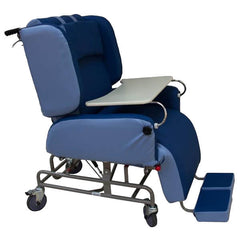
Best Pressure Relief Chairs
This collection features a range of pressure relief chairs, also known as pressure care seating or therapeutic chairs. These are specialised seating solutions designed to support individuals who sit for extended periods, have limited mobility, or are at risk of developing pressure injuries. The range includes various models, from mobile pressure care chairs to rise and recline chairs with integrated pressure care, each designed to improve comfort and maintain skin integrity.
Alternating Air Pressure Relief Chair for Bariatric Patients
Understanding Pressure Relief Chairs for Seating and Skin Integrity
What is a Pressure Relief Chair?
A pressure relief chair is a piece of specialist seating designed to manage a user's posture and redistribute their body weight to minimise pressure points. The primary goal is to prevent the formation of pressure injuries, also known as pressure sores or decubitus ulcers. Effective chairs address four key risk factors: direct pressure on bony areas, shear forces caused by sliding, friction from rubbing against surfaces, and the microclimate of heat and moisture at the skin's surface. They achieve this through a combination of supportive design, specialised cushions, and adjustable functions.
Who Needs a Pressure Care Chair?
Individuals who spend long periods seated are the primary users of pressure care chairs. This includes a wide range of people, such as frail elderly individuals in aged care, people with spinal cord injuries, or those with neurological conditions like motor neurone disease. They are also essential seating for limited mobility, post-surgery recovery, and for bariatric patients who require robust seating with appropriate weight distribution. Seating is chosen based on an individual's risk level, mobility, posture, and skin condition.
Types of Specialist Seating Solutions
Static and High Back Comfort Chairs
Static chairs, including high back comfort chairs, provide postural support and pressure redistribution without powered functions. These are often used in aged care facilities and home environments. They rely on high-specification foam, correct dimensions, and supportive contours to provide comfort and reduce pressure injury risk for users who have some ability to reposition themselves. They are a foundational part of a 24-hour pressure care management plan.
Mobile Pressure Care Chairs and Porter Chairs
Mobile pressure care chairs, often called porter chairs, are equipped with lockable castors. This feature allows a caregiver to move the user between rooms safely and easily without requiring a transfer to a separate wheelchair. This reduces the number of transfers, which can be difficult and risky for both the user and caregiver. These chairs combine the benefits of pressure redistribution and postural support with the convenience of mobility within a home or care facility.
Rise and Recline Chairs with Pressure Care
Rise and recline chairs with pressure care combine two functions. The rise function assists the user in moving from a sitting to a standing position, promoting independence and reducing strain. The recline function allows for changes in posture. When these chairs are equipped with pressure-redistributing cushions, they offer a dual benefit of mobility assistance and skin protection. It is important that a standard domestic recliner is fitted with an appropriate pressure cushion to be effective for pressure care.
Tilt-in-Space Chairs for High Dependency Seating
Tilt-in-space chairs are a form of high dependency seating for individuals at high or very high risk of pressure injuries, who are unable to reposition themselves independently. The chair tilts the entire seat and backrest unit backwards while maintaining the user's hip and knee angles. This action shifts body weight from the buttocks and sacrum to the larger surface area of the back. This offloads pressure from high-risk areas with minimal shear force, making it a critical function for pressure ulcer management.
Core Technologies in Pressure Management
Pressure Redistribution: Air, Gel, and Foam Cushions
Pressure redistribution is the principle of spreading body weight over the largest possible surface area to lower pressure on any single point. This is primarily achieved through the cushion. Air-cell cushions contain interconnected air cells that immerse the user, equalising pressure. Gel cushions use fluid-like pads to distribute load. High-specification foam cushions, including memory foam, deform to contour to the body. The effectiveness of a cushion can depend on the firmness of the chair base it is used on. Hybrid cushions combine these materials.
Pressure Offloading: Tilt, Recline, and Leg Elevation
Offloading functions actively shift the user's weight away from high-risk areas. Tilt-in-space is a primary offloading function that moves pressure from the pelvis to the back. Recline, which opens the seat-to-back angle, can help vary posture but may increase shear forces if not used correctly, often in combination with tilt. Elevating leg rests can help manage oedema and distribute some weight to the thighs, but require proper support to be effective. Regular use of these features, as part of a repositioning schedule, is vital.
Static vs. Dynamic Pressure Care Systems
Pressure care systems can be static or dynamic. Static systems are reactive, using materials like high-spec foam, gel, or non-powered air cells that constantly support and redistribute pressure in response to the user's body. They do not have moving parts. Dynamic systems are active, using a powered pump to automatically inflate and deflate different air cells in a cycle. This systematically alters the points of contact to provide regular, automated offloading. Dynamic systems are typically reserved for very high-risk individuals who cannot be repositioned.
How to Choose the Right Pressure Relief Chair
Assessing Individual Needs and Risk Factors
Choosing the correct chair requires a comprehensive assessment of the user's needs. This includes their medical history, risk of pressure injuries (often using a tool like the Braden Scale), skin condition, mobility, and ability to reposition themselves. Posture, body size and weight (including bariatric considerations), and cognitive function are also critical factors. The intended environment, such as a private home or a care facility, and the capabilities of caregivers also influence the final choice.
Essential Features: Fit, Adjustability, and Materials
Beyond the core technology, several features are essential. The chair's fit is paramount; seat depth, width, and height must match the user to ensure proper posture and prevent sliding. Adjustable components like armrests, headrests, and lateral supports help to create a custom fit. The materials used for upholstery should be considered; breathable, multi-stretch fabrics help manage the microclimate of heat and moisture and reduce shear forces. For incontinence management, easy-to-clean medical upholstery is often necessary. Exact specifications may vary depending on model.
Frequently Asked Questions about Pressure Relief Chairs
What is the difference between a tilt-in-space chair and a recliner?
A recliner opens the angle between the seat and the backrest, which can cause a person to slide and experience shear force. A tilt-in-space chair tilts the entire seat and backrest unit together, maintaining the body's posture. This allows for significant pressure redistribution from the buttocks to the back without the risk of sliding.
Who needs a pressure care chair?
Pressure care chairs are for anyone who sits for long periods and is at risk of skin breakdown. This includes frail older adults, individuals with neurological conditions, people recovering from surgery, wheelchair users, and those with severely limited mobility. The specific type of chair depends on the individual's level of risk and mobility.
Can a pressure relief chair prevent pressure sores?
A pressure relief chair is a critical tool for preventing pressure sores (pressure injuries) by reducing and redistributing pressure. However, it is most effective as part of a complete care plan. Even with a specialist chair, regular repositioning, skin checks, proper nutrition, and hydration are essential for maintaining skin integrity.
Are all pressure relief cushions the same?
No. Pressure relief cushions use different technologies, including high-specification foam, gel, and air cells. Each has different properties for pressure redistribution, stability, and maintenance. The best type of cushion depends on the user's specific risk level, posture, and the chair it will be used in.
How do I measure for a specialist chair?
Key measurements include seat width, depth, and height, as well as backrest height and armrest height. It is strongly recommended to have an assessment conducted by a qualified clinician, such as an occupational therapist or physiotherapist, to ensure the chair is correctly sized and configured for the user's specific postural and pressure care needs.