




Best Food Preparation Aids for Elderly or Disabled
Enhance Kitchen Safety and Independence with Food Preparation Aids
Look, I get it. There's something deeply personal about being able to cook for yourself. It's not just about the food—it's about independence, confidence, and the simple pleasure of creating something with your own hands. But when those hands don't cooperate like they used to, kitchen tasks that once felt effortless can become frustrating challenges.
That's where food preparation aids come in. These aren't just random gadgets—they're thoughtfully designed tools that work around physical limitations, whether you're dealing with arthritis, recovering from a stroke, or managing tremors. The right kitchen aids can be the difference between giving up cooking altogether and reclaiming your kitchen confidence.

Aids for Opening Jars, Bottles, and Cans
Remember that moment when you're halfway through a recipe and can't get a jar open? That frustration is multiplied when you're dealing with hand weakness or pain. Opening containers is often the first kitchen task that becomes difficult—but thankfully, it's one of the easiest to solve.
Jar and Bottle Openers for Weak Grip
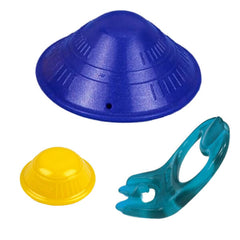
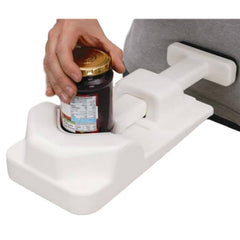
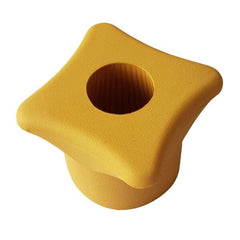
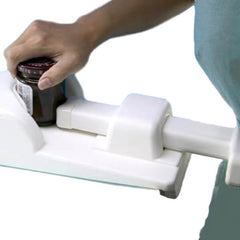
Those vacuum-sealed jars can challenge even strong hands sometimes. If you're dealing with arthritis, a good jar opener uses leverage to do what your wrist can't. Under-cabinet mounted openers give you a secure grip point, while electric jar openers do all the twisting for you—just position it and press a button. For bottles, look for openers with shaped handles that nestle comfortably in your palm, giving you better control without the strain.
Automatic and One-Touch Can Openers
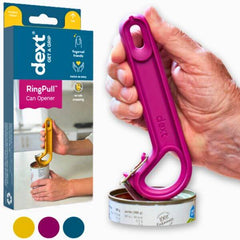
Traditional can openers require that awkward pinch-grip-and-twist motion that can be absolute murder on arthritic joints. One-touch models completely change the game—just position it on the can, press once, and the machine does all the work, some even lifting the lid off for you when it's done. If you struggle with ring pulls (those frustrating little tabs on canned soups and such), a simple ring pull helper gives you the leverage to pop them open without straining your fingers.
Adaptive Tools for Chopping, Peeling, and Slicing
Let's be honest—prep work is where cooking gets real. All that chopping, peeling and slicing takes time, focus, and steady hands. But there's a whole world of adaptive tools that can make these tasks more manageable.
Adapted Cutting Boards for Stability
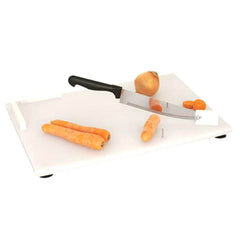
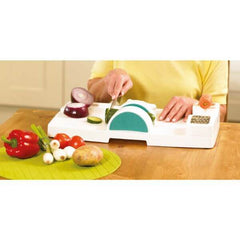
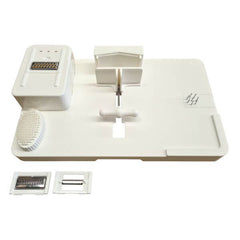
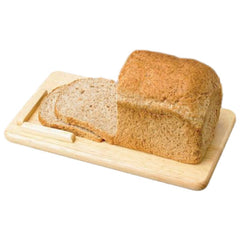
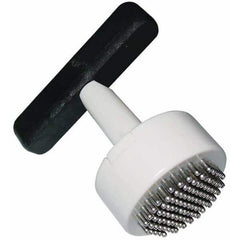
An adaptive cutting board is like having an extra hand in the kitchen. Some come with little spikes that hold vegetables steady while you chop, which is brilliant if you have tremors or use only one hand. Others have corner guards that let you spread butter or slice bread with one hand without everything sliding around. These simple modifications turn a basic cutting board into something that actually works with you, not against you.
Ergonomic Knives and Choppers
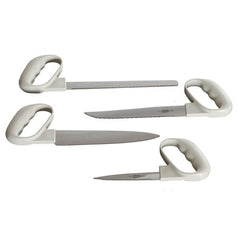
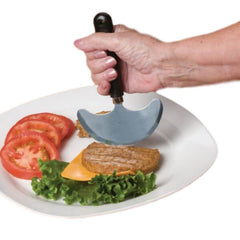
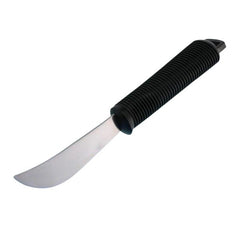
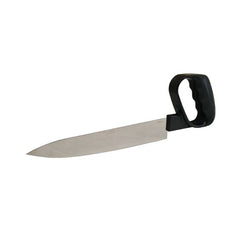
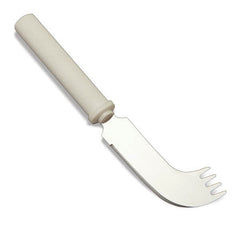
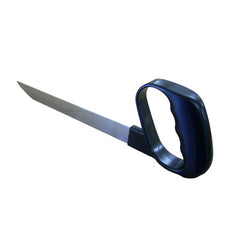
A good knife should feel like an extension of your hand. Rocker knives use a rocking motion instead of requiring you to press down hard—perfect if your hands aren't as strong as they once were. Ergonomic kitchen knives position your wrist at a better angle, reducing strain during longer cooking sessions. And don't overlook the humble mezzaluna—that half-moon rocker that lets you chop herbs and vegetables with a gentle back-and-forth motion rather than repetitive up-and-down chopping.
Easy-Grip Peelers and Graters
Standard peelers and graters can be slippery nightmares for anyone with grip issues. Look for versions with chunky, cushioned handles that won't slip even when your hands are wet. Some graters even come with suction bases so you can secure them to your counter and use them one-handed. These seemingly small design tweaks make a world of difference when your hands don't always cooperate.
Aids for Mixing, Pouring, and Handling Liquids
Hot liquids and heavy pots are where kitchen safety concerns really ramp up. Burns and spills aren't just annoying—they can be dangerous. These aids focus on keeping everything stable and manageable.
Non-Slip Bowls and Stabilising Aids
Ever try to stir something in a bowl only to have it spin around the counter like it's auditioning for a dance competition? Non-slip bowls with rubber bases stay put while you mix. For bowls you already own, a simple non-slip mat underneath works wonders. There are even bowl holders that tilt the bowl toward you and keep it steady, making it easier to see what you're mixing and reducing strain on your arms.
Kettle Tippers and Lightweight Kettles
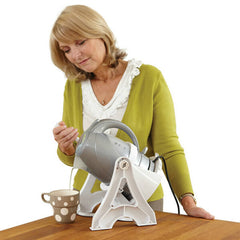
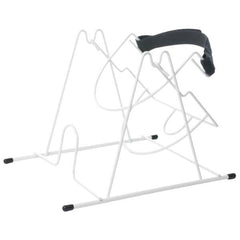
Pouring hot water is a common cause of kitchen burns, especially if you're dealing with strength issues or tremors. A kettle tipper is essentially a cradle for your kettle that allows you to pour by tilting rather than lifting—dramatically reducing the risk of spills and burns. If you prefer to lift, lightweight kettles are designed to hold less water while still providing enough for a cup or two, making them much more manageable.
Specialised Utensils for Grip and Control
Standard utensils assume a certain level of dexterity and control that not everyone has. Whether you're managing Parkinson's, recovering from a stroke, or dealing with severe arthritis, specialized utensils can make eating and cooking more accessible.
Built-Up and Weighted Utensils
Sometimes the simplest solutions are the most effective. Built-up handle utensils have thicker, softer grips that distribute pressure more evenly across your hand, making them easier to hold. Weighted utensils add a bit of heft to dampen tremors—like how it's easier to pour from a full water bottle than a nearly empty one. The extra weight provides stability that can make all the difference between feeding yourself confidently and feeling frustrated at mealtime.
One-Handed Kitchen Aids
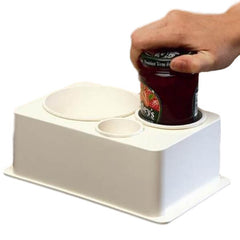
If you only have the use of one hand, certain kitchen tasks can seem nearly impossible. Beyond the cutting boards mentioned earlier, there are clever tools like spreading boards that secure bread while you butter it, and devices that hold containers steady while you open them. These ingenious tools can help maintain independence in the kitchen, especially important for stroke survivors or those with similar challenges.
Kitchen Aids for Low Vision
Vision changes are a normal part of aging, but they shouldn't mean the end of cooking independence. These tools rely on sound and touch rather than sight alone.
Talking Scales and Timers
Digital displays can be nearly impossible to read if you have vision impairments. Talking scales announce measurements out loud, eliminating squinting at tiny numbers. Similarly, talking timers clearly tell you when your food is ready without you needing to constantly check a visual display. These audio tools keep you precisely on track with recipes without straining your eyes.
Large Print Measuring Tools
Sometimes the simplest solution is just making things bigger and clearer. Large print measuring cups and spoons with bold, high-contrast markings are much easier to read than standard versions. Angled measuring cups are particularly clever—they let you read measurements by looking down into the cup, so you don't need to bend down to eye level with your counter to see if you've got the right amount.
Essential Kitchen Safety Equipment
Beyond specialized tools for specific tasks, there's some general safety equipment that can make any kitchen safer and more comfortable.
Cut Resistant Gloves and Finger Guards
A cut in the kitchen isn't just painful—it can lead to complications if you're on certain medications or have healing issues. Cut-resistant gloves provide protection while you're chopping and slicing, especially useful when you're getting used to new tools or if your hands aren't as steady as they once were. Finger guards offer a simpler option, shielding just your fingertips from accidental nicks.
Anti-Fatigue Mats and Perching Stools
Standing on a hard kitchen floor quickly becomes uncomfortable for anyone, but especially if you have joint issues. Anti-fatigue mats provide cushioning that reduces strain on your feet, legs, and back, making longer cooking sessions more bearable. A perching stool offers another solution—it lets you rest in a semi-standing position, taking weight off your legs while still keeping you at counter height for food preparation.
How to Choose the Right Kitchen Aids
With so many options available, finding the right tools can feel overwhelming. Start by identifying your biggest challenges in the kitchen. Is grip strength your main issue? Focus on openers and built-up handles. Dealing with tremors? Look for weighted utensils and stabilizing tools.
Choose tools that are not just effective but also easy to clean—because let's face it, if something's a pain to wash, it'll end up sitting in a drawer unused. For more complex needs, an occupational therapist can provide personalized recommendations based on your specific situation, helping you create a kitchen setup that works for you, not against you.
The right kitchen aids don't just make cooking possible—they make it enjoyable again. And there's something profoundly important about that, about reclaiming the simple pleasure of preparing your own meals, exactly the way you like them.
Frequently Asked Questions
What are the most essential kitchen aids for seniors with arthritis?
For arthritis, focus on aids that reduce the need for strong gripping and twisting motions. Essential items include electric jar openers, one-touch can openers, rocker knives, and utensils with large, built-up, non-slip handles. Lightweight pots and pans also reduce strain on joints.
How can I make cooking easier with one hand?
One-handed cooking can be made easier with tools that stabilise food and equipment. Key aids include adaptive cutting boards with spikes or clamps, rocker knives for chopping, non-slip mats to place under bowls, and suction-base graters or peelers.
What tools help with opening tight jars and cans?
To open tight jars, consider an under-cabinet jar opener for leverage or an electric jar opener that automates the task. For cans, hands-free and one-touch electric can openers are highly effective and require minimal physical effort compared to manual versions.
Are there kitchen tools designed for people with low vision?
Yes, many kitchen aids are available for those with low vision. Look for talking kitchen scales and timers that provide audio feedback. Measuring cups and spoons with large, high-contrast print are also very helpful for accurate ingredient measuring.
What should I look for when buying food preparation aids?
When buying aids, first identify the specific task that is most difficult. Look for tools that are easy to operate and simple to clean. Consider durability and material quality, favouring food-grade silicone and stainless steel. For some, multi-function tools save space, while for others, a single-purpose tool that performs its job perfectly is better.